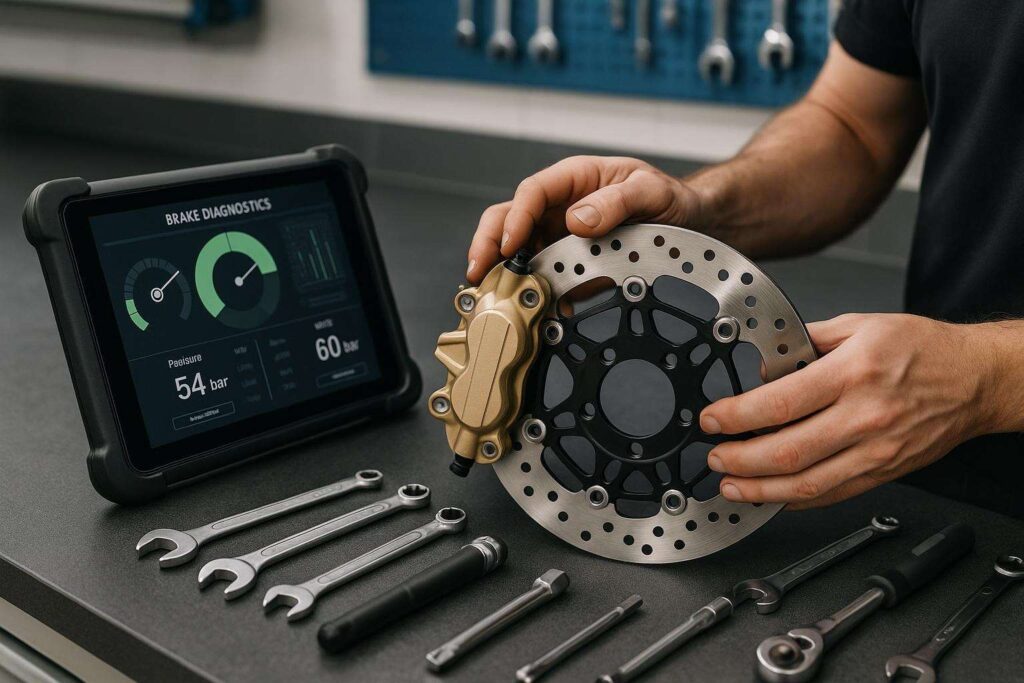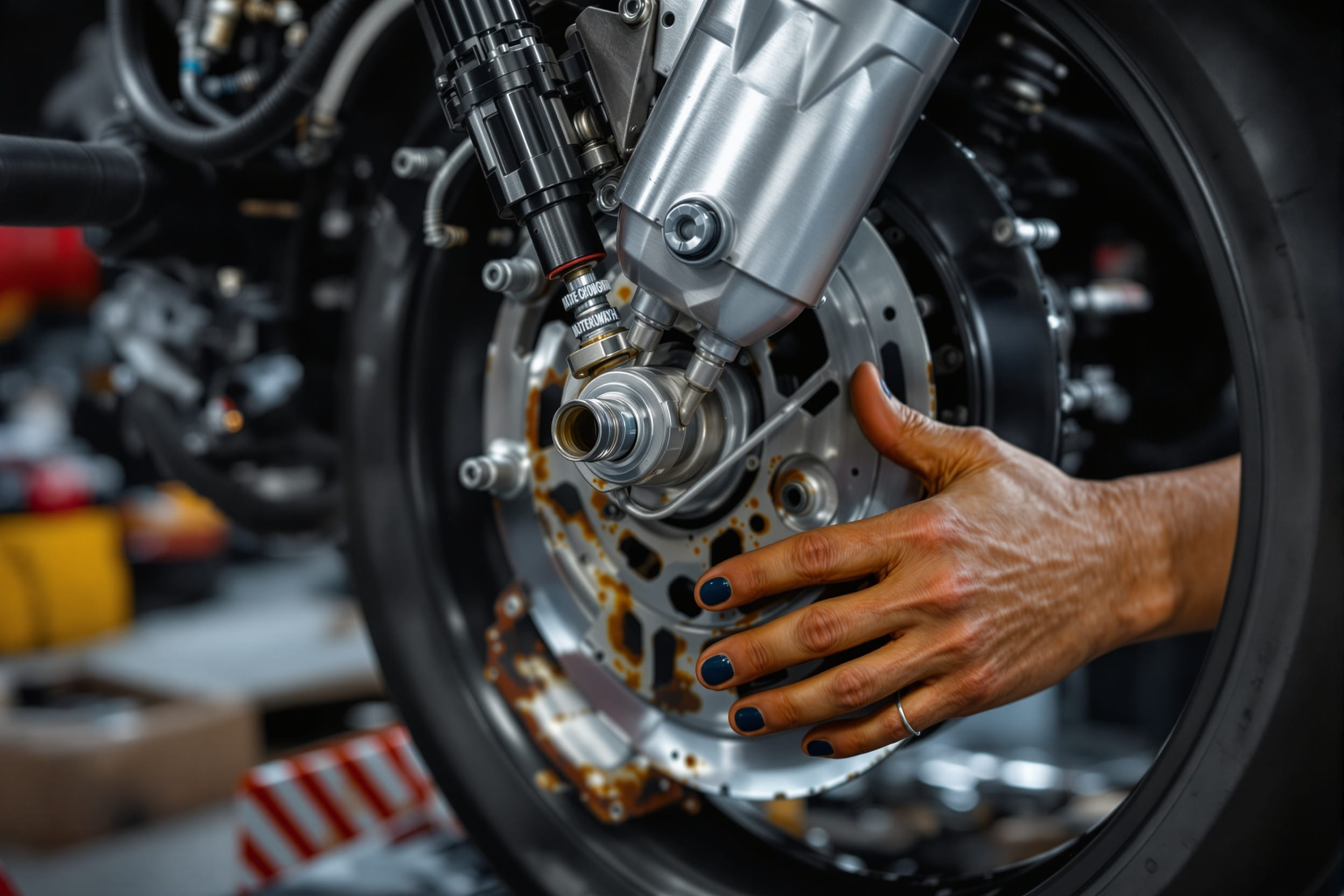
High-performance braking demands more than premium hardware. Learn why brake fluid maintenance is critical for consistent stopping power.
You can fit the finest Brembo calipers, the most exotic braided lines, and the highest-specification discs — but if your brake fluid is degraded, your braking performance will be compromised. Brake fluid maintenance is the most overlooked aspect of motorcycle brake system care, and it is one of the most critical.
Why Brake Fluid Degrades
Glycol-based brake fluids (DOT 3, DOT 4, DOT 5.1) are hygroscopic — they absorb moisture from the atmosphere over time. As water content increases, the fluid’s boiling point drops. Under hard braking, brake fluid temperatures can exceed 200°C. If the fluid boils, it creates vapour bubbles in the hydraulic circuit. Unlike liquid, vapour is compressible — the result is a spongy, inconsistent lever feel, or in extreme cases, complete brake fade.
For road riders, annual fluid replacement is the minimum recommendation. For track day riders, fluid should be replaced before every track day. Racing teams often replace fluid between sessions on hot days.
Choosing the Right Fluid
DOT 5.1 fluid offers the highest dry boiling point (260°C minimum) of the glycol-based fluids and is the correct choice for performance and track use. It is compatible with DOT 3 and DOT 4 systems. Do not confuse DOT 5.1 with DOT 5 — DOT 5 is silicone-based, not compatible with standard systems, and not suitable for performance use.
Castrol React SRF is the gold standard for track use, with a dry boiling point of 310°C. It is significantly more expensive than standard DOT 5.1 but provides a meaningful safety margin for riders who push hard on track.
Bleeding Procedure
A proper brake bleed removes all old fluid and any air from the system. We recommend a vacuum bleeder or pressure bleeder for consistent results. Always use fresh fluid from a sealed container — brake fluid absorbs moisture from the air, so a half-used bottle left open for months is already degraded. After bleeding, check lever feel carefully before riding. A firm, consistent lever with no sponginess indicates a correctly bled system.