Why It Makes Sense to Do a VIN Check on Your Track Day Truck Prior to Next Season’s First Event
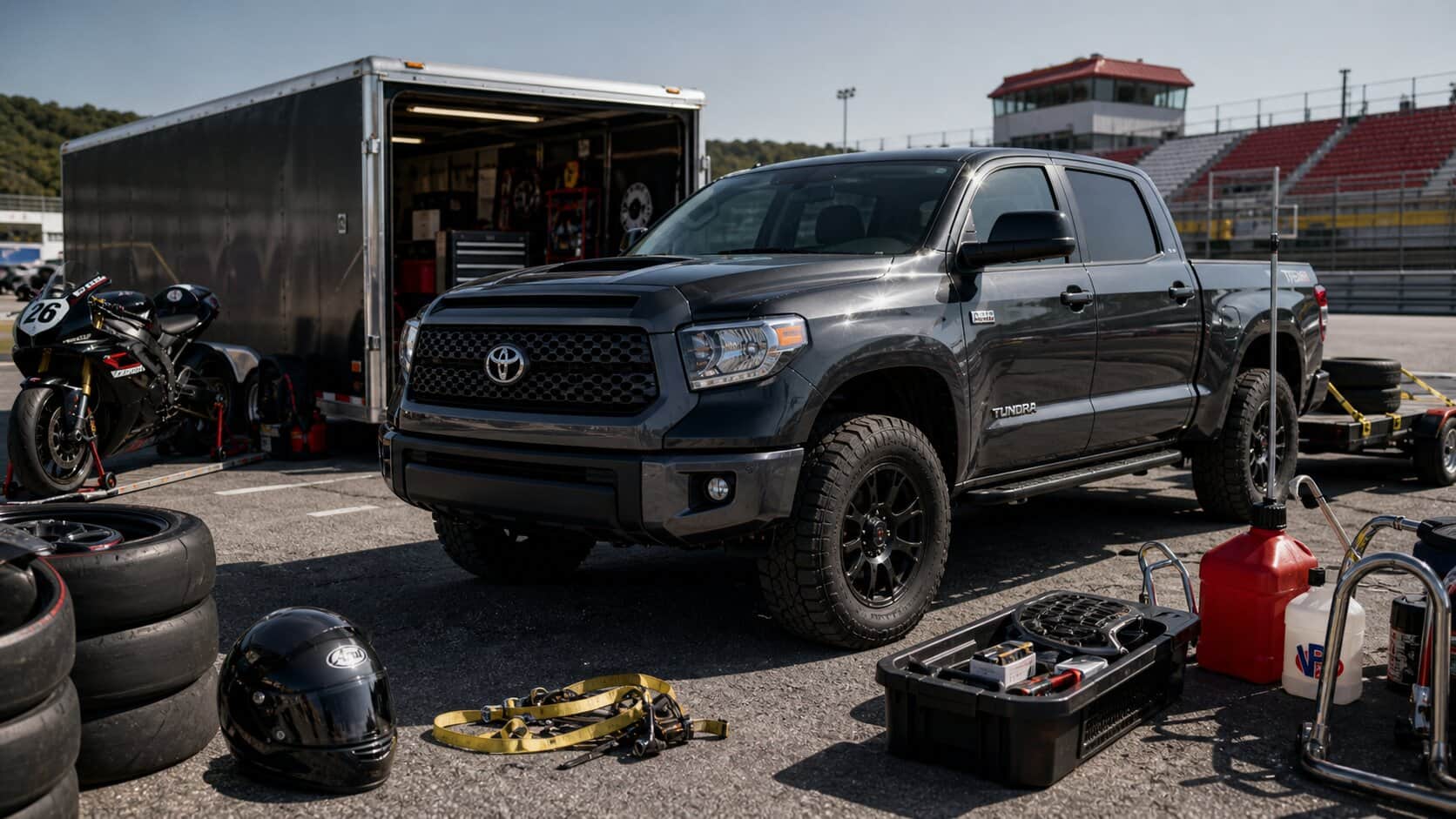
Take a stroll through the paddock at Mid-Ohio or Road Atlanta on a Friday afternoon and you’ll see the exact same thing every week. Carbon-fiber Brembo calipers and Marchesini wheels shine through open trailer doors while the trucks used to move your privateer race rig from place to place tend to be Toyotas in every instance. Whether it’s a Tacoma or a Tundra pulling the majority of privateer racing gear on the eastern US circuit, a Sequoia for some family-based efforts, and even a 4Runner to haul your R6, the bottom line here is this: The motorcycle itself may get plenty of attention, but there is something else that merits the exact same level of care and diligence, yet is frequently ignored. After all, that Toyota you’re using to tow roughly $40,000 to $60,000 worth of motorcycle, leathers, gas cans, and spare parts is nothing more than a piece of gear with potentially fatal flaws, just like the wear on your brake pads or fatigue of a caliper bracket.
The Powertrains of Your Track Day Truck
There are only three Toyota powertrains used in support vehicles seen at road-racing events, and all of them require a separate VIN check procedure before use in the towing capacity. While the first-generation Tacoma was equipped with a 5VZ-FE 3.4L V6 up to 2004 model year, the following generation relied on a 1GR-FE 4.0L engine, capable of pulling 6,800 pounds, sufficient for a 24-foot enclosed trailer with two bikes on board. As for the Toyota Tundra, it is equipped with a 3UR-FE 5.7L V8 powertrain and a capacity to pull as much as 10,200 pounds needed for a team operating more than one bike and with a tire cart and generator installed. However, each of the listed powertrains features certain weaknesses that should be checked prior to use: 5VZ-FE – replacement of timing belt due every 90,000 miles; 1GR-FE – secondary air injection system prone to failures during winter months; 3UR-FE – early production models were found to suffer from leaking camshaft towers.
What Exactly Can Be Found via a VIN Lookup?
The VIN is the only official document that allows you to check the entire service and incident history of your truck prior to purchase or change. While Carfax report can serve as a good reference point, a complete VIN check would allow you to verify the specifications claimed by the seller against the actual configuration. This step is especially crucial when dealing with aftermarket modifications since there might be a number of discrepancies between the actual and advertised specs, including lack of transmission cooling, additional weight, and a seven-pin connector needed for the brake controller on tow packages. In case anyone wonders how to decode any Toyota VIN online, the option is available at no cost and produces the required information in seconds.
Recall Status, Collision Record, and Hidden Repainting
A vehicle’s status regarding various recalls is the second thing that makes a VIN check worth paying the few dollars. For instance, Tundra frame corrosion, Tacoma rear leaf-spring inspection, as well as airbag inflator replacements are among some of the recent campaigns affecting paddock-grade trucks, and failing to verify if the unit in question has undergone all the recommended procedures could put your gear in jeopardy. Moreover, there are instances where trucks that look brand-new on paper may feature multiple collisions and hidden repaints performed to cover the damage. Finally, you may discover the fact that your truck suffered from odometer rollback, had issues with registration or lien status. As far as costs involved, we’d argue that the expense of such procedure hardly exceeds a couple of minutes and a few dollars.
Making the Procedure Part of Your Regular Routine
When dealing with trucks needed for multiple events, it is reasonable to create a regular process and schedule periodic checkups. The standard template followed by paddock veterans includes VIN checkup during acquisition process, storing report into the truck binder, annual re-check of recalled items in January, and maintenance log where each major mile mark is associated with the service receipt. To make sure that your truck has all the towing options, it would be a good idea to verify authenticity of the tow package and take corresponding photos. Besides that, it is highly advisable to flush brake fluid every two years as you do for your motorcycle, and to inspect wheel bearing every two years. If you can maintain proper brake maintenance and ensure that your forged wheel is perfectly torqued, you shouldn’t have a problem with doing the same for your tow truck. It goes without saying that the cost of the check won’t exceed a couple of bucks, while its absence will cost you plenty of headaches. Note that insurance companies started comparing VIN with salvage, junk, and total loss databases at quoting stage, and the flags appearing there could affect your rate, or even cause cancellation of your enclosed trailer insurance.